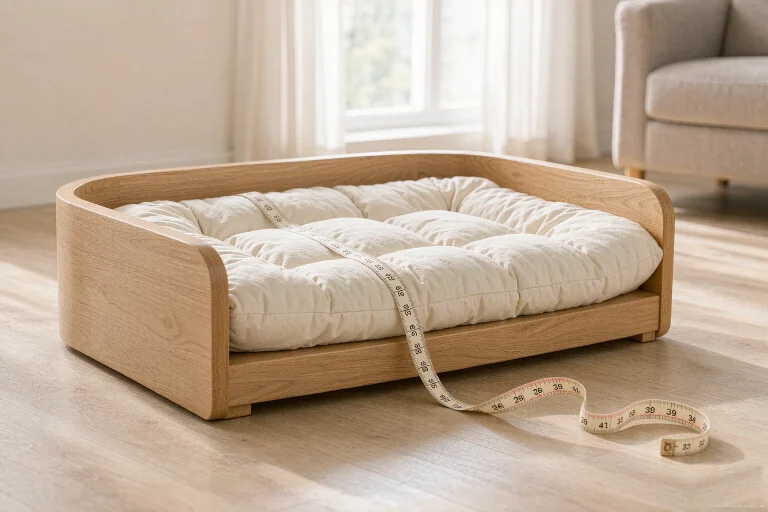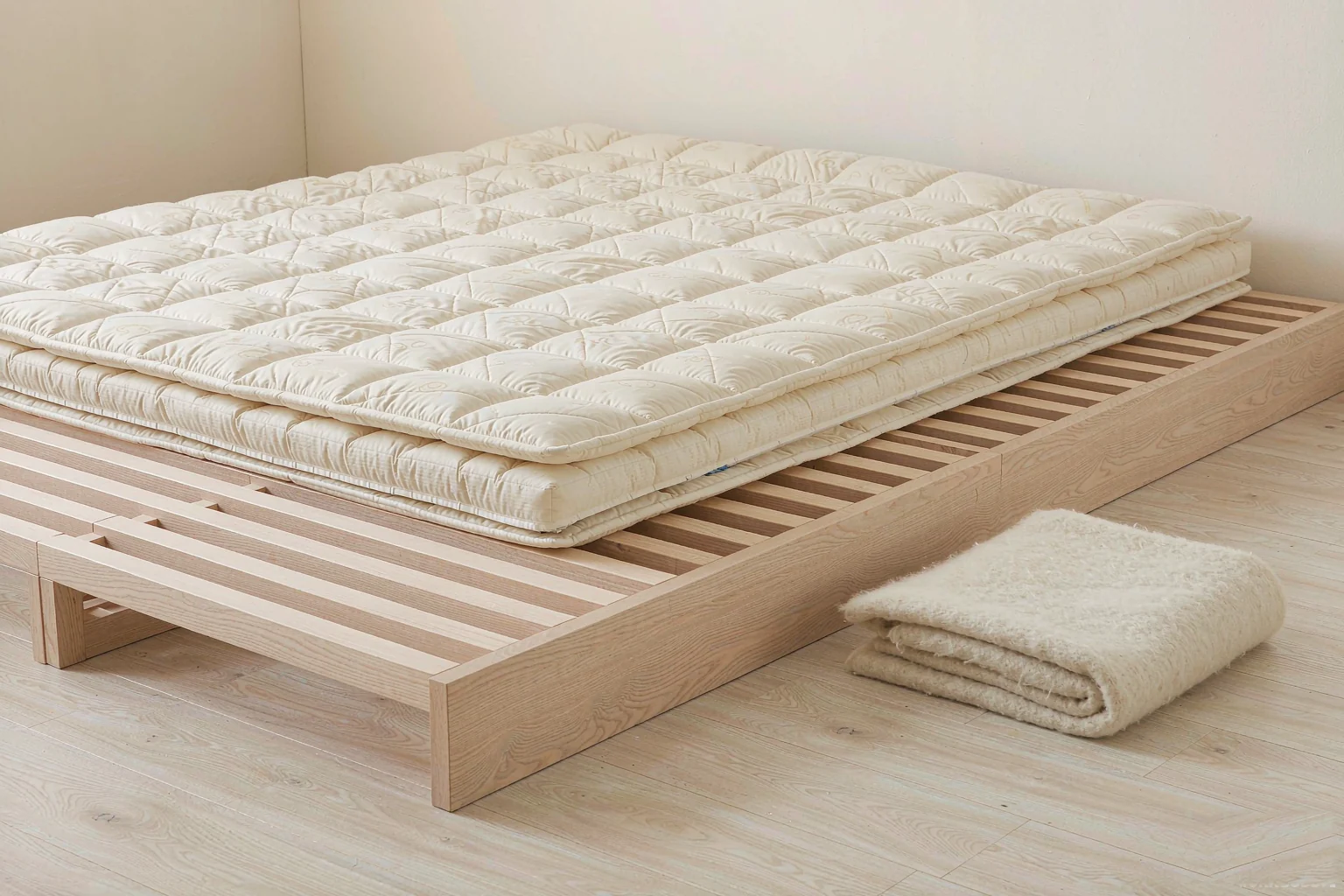
Orthopedic beds are sold as if they solve arthritis. They do not. What they do is spread load across a larger surface, which changes how much pressure builds up on hips, elbows and shoulders during the hours a dog spends lying down.
What the foam is doing
Memory foam is viscoelastic: it deforms under weight and recovers slowly. In a pet bed that means it conforms to the shape of the dog rather than pushing back flat. The practical effect is fewer pressure points, which matters most for older dogs who lie down for long stretches and for large breeds carrying more weight per square inch.
Where it helps most
- Senior dogs with reduced mobility who take longer to settle.
- Large and giant breeds, where the same joint load is spread over more structure.
- Dogs recovering from surgery or with a vet-diagnosed joint condition.
- Dogs who currently sleep on hard floors or thin mats.
Where it does not
A bed cannot treat arthritis, hip dysplasia or an injury. If your dog is limping, struggling on stairs, or reluctant to get up after resting, that is a veterinary conversation, not a bedding decision. A good bed is supportive, not therapeutic.
What to look for
- At least 3 inches of genuine foam core, not shredded fill — shredded fill compresses to nothing within months.
- A removable, washable cover. A bed you cannot wash becomes unhygienic long before it wears out.
- A low entry lip for dogs who cannot step over a high bolster.