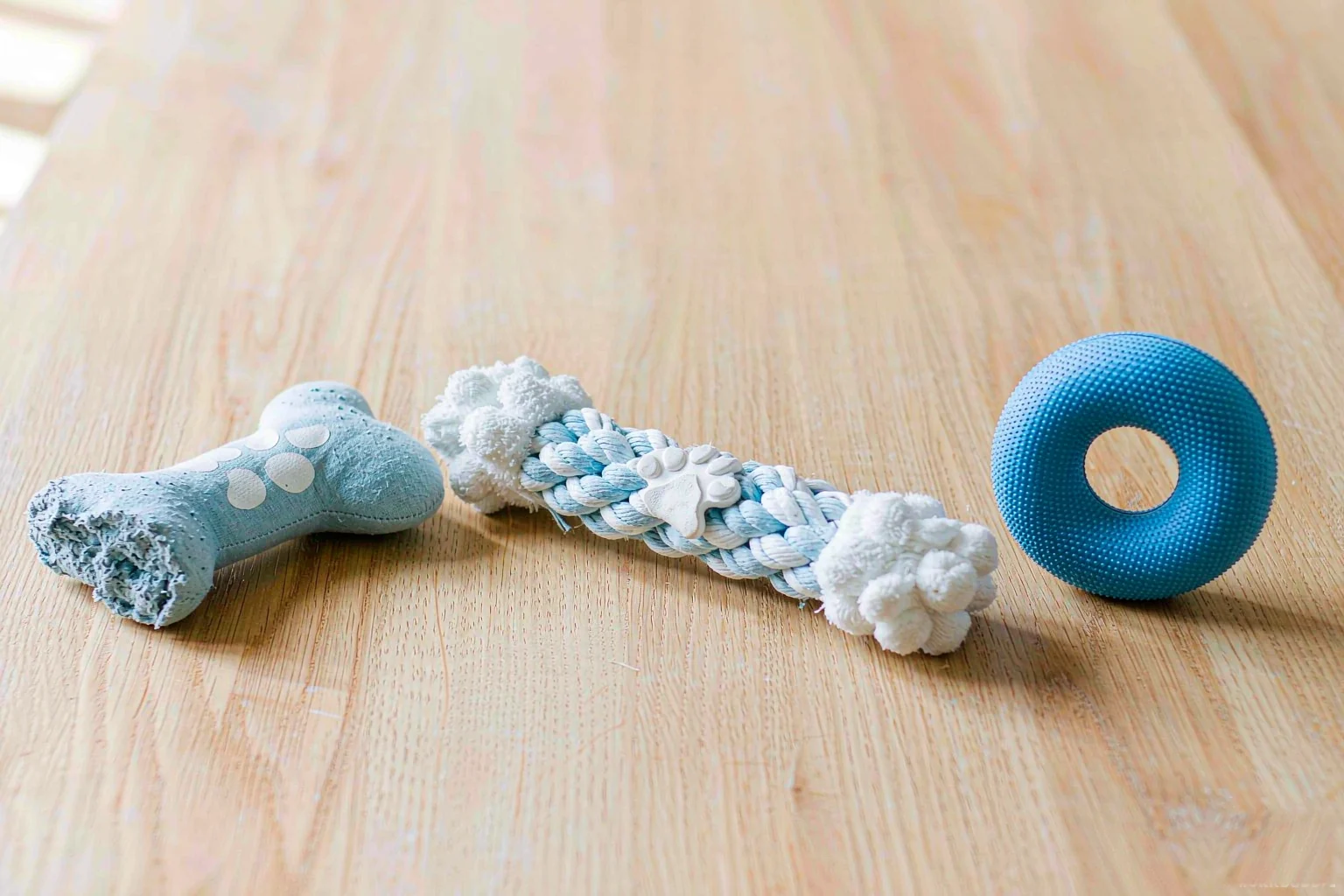
A chew toy does not usually fail all at once. It develops a crack, then a flap, then a piece comes free — and the piece that comes free is the one that gets swallowed. Five seconds of inspection after each session is the whole routine.
The weekly check
- Squeeze the toy along its length. Any soft spot or crack is a failure point.
- Look at the ends and any seams, where most tears start.
- Check the size against your dog’s mouth. A toy that now fits entirely behind the molars is a choking hazard, regardless of condition.
Replace on signs, not on a calendar
There is no useful schedule — a power chewer destroys in a week what a gentle dog keeps for a year. Replace when you see damage, never mind how new the toy is.
Matching toy to chewer
- Power chewers need dense, non-splintering material. Soft rubber and fabric toys will be destroyed in minutes.
- Moderate chewers do well with textured dental toys that scrub as they chew.
- Seniors and small breeds need softer material. A hard chew on a compromised tooth is an expensive vet bill.
What to do when a piece breaks off
Take the toy away immediately and do not leave the fragments where they can be found. If you suspect a piece has been swallowed, call your vet with the material and approximate size rather than waiting for symptoms.