Airline pet policies change, and they change more often than most travel advice is updated. Confirm the current rules directly with the airline before booking, then work backwards from their requirements.
1. Cabin or cargo
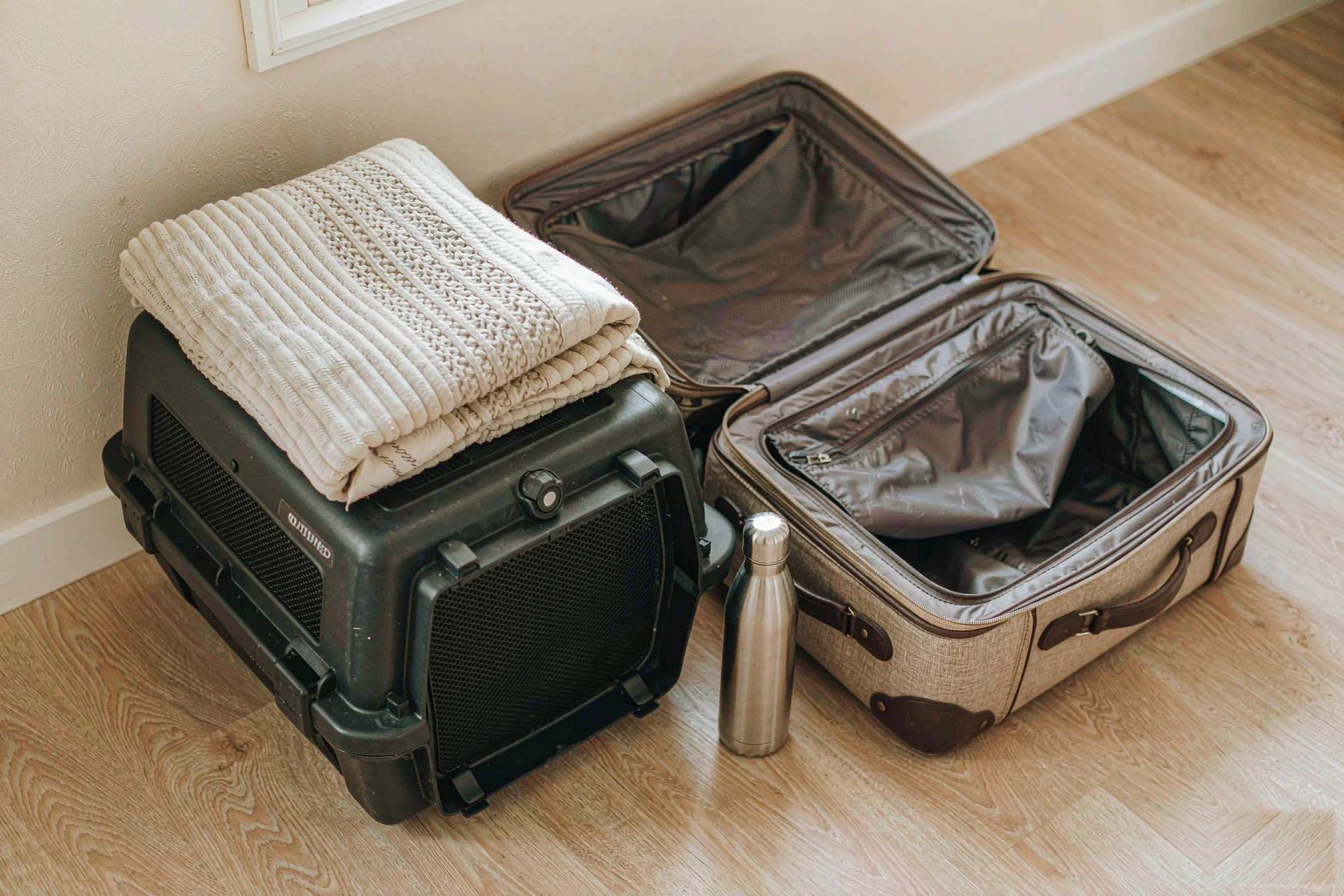
Most airlines allow a small pet in the cabin only if the carrier fits under the seat in front of you, and many have a combined weight limit for pet plus carrier. Larger pets travel as checked baggage or cargo, which requires a hard-shell crate meeting IATA construction standards.
2. The carrier itself
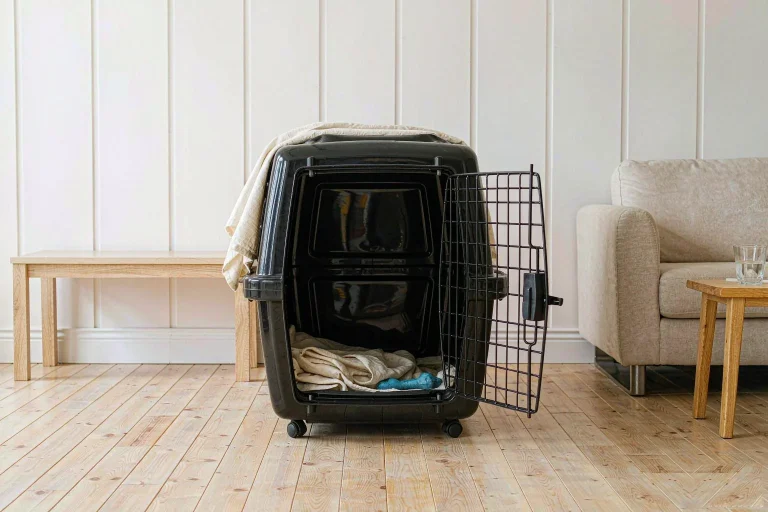
- Hard-shell crates for cargo must have ventilation on at least three sides, secure latches and no wheels.
- The pet must be able to stand, turn around and lie down naturally inside.
- Tie-down points and a water bowl that attaches from outside are usually required for cargo.
3. Health documentation
- A health certificate issued by a vet within a short window before travel — the window varies by destination.
- A current rabies vaccination record. Some destinations require a titre test months in advance.
- For international travel, check the destination’s own import rules: they are separate from the airline’s.
4. The acclimatisation
Book the carrier out at home at least two weeks before travel and follow a proper introduction routine. An animal that has only seen the carrier on the day of the flight will spend that flight stressed.
Finally: never sedate a pet for air travel without explicit veterinary advice. Sedation at altitude carries real risk.