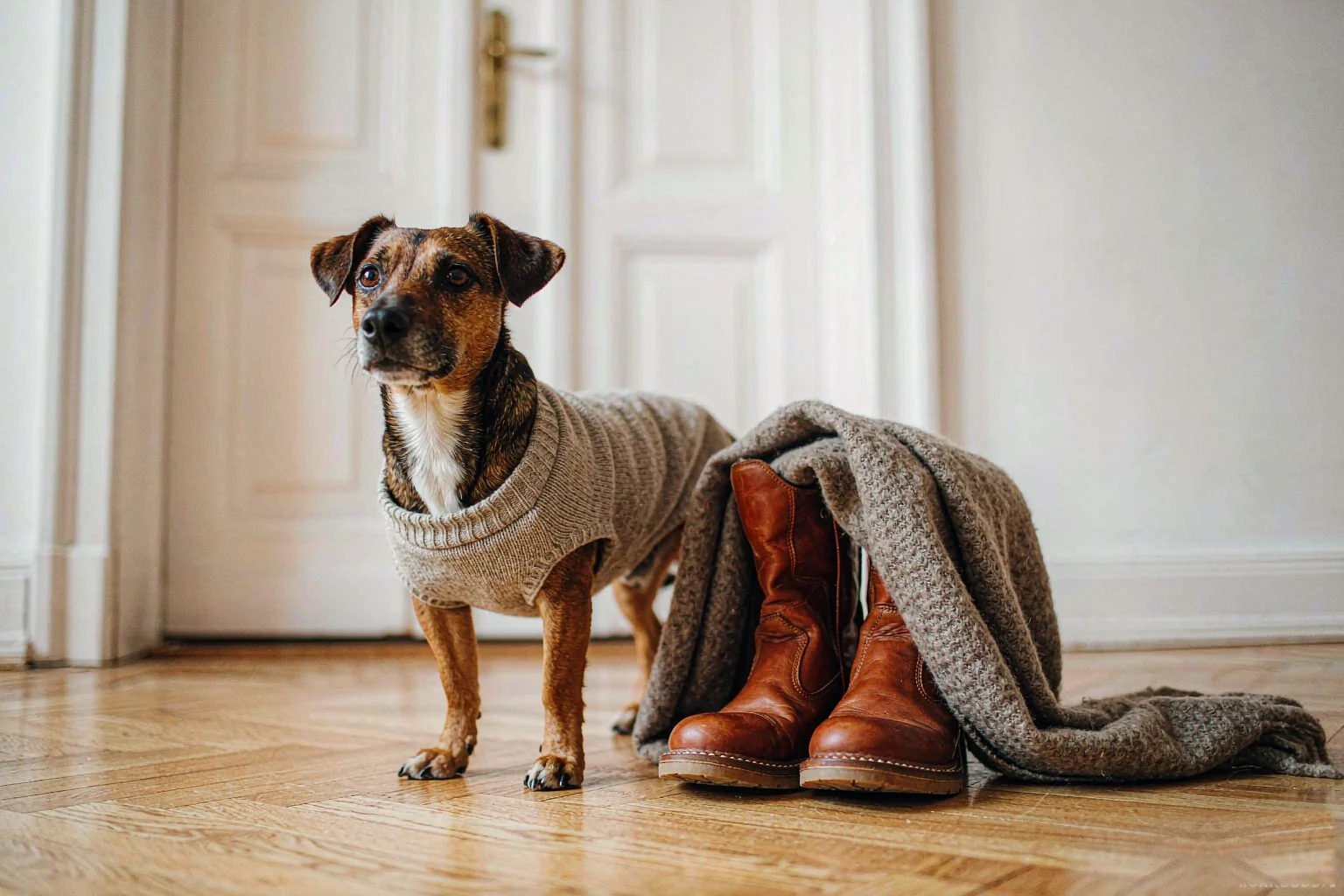
Putting a coat on a husky in winter is not just unnecessary, it can work against the animal. Double-coated breeds regulate heat through a dense undercoat that a coat compresses and flattens, reducing its insulation.
Dogs that usually need a coat
- Short, single coats: greyhounds, whippets, boxers, pointers, dachshunds.
- Small breeds, which have a higher surface area to volume ratio and lose heat faster.
- Seniors, puppies, and any dog with a thin coat or low body fat.
- Any dog outdoors for extended periods in wet, windy conditions, regardless of breed.
Dogs that usually do not
- Double-coated breeds: huskies, malamutes, samoyeds, German shepherds, most spitz types.
- Breeds with a naturally dense, weather-resistant outer coat.
Fit matters more than warmth
A coat that rubs under the front legs causes chafing within a mile of walking. Check the fit at the chest and under the belly, and re-check after the first few wears — a wet coat stretches.
The real winter risks
Cold is rarely the main hazard. Rock salt and de-icing chemicals burn paws and are toxic when licked off, and a coat that absorbs water makes a dog colder than no coat at all. Choose a water-resistant shell rather than a knit for wet conditions.